
About the Company

Myself Shailesh a beekeeper at heart and an exporter by passion. What started as a small family beekeeping venture has grown into a trusted name in natural honey production and global exports. Our bees thrive in clean, flower-rich environments, allowing us to harvest honey that’s as pure as nature intended.

We ensure every jar reflects our dedication to quality and authenticity. From local hives to international markets, we share the golden goodness of nature with the world. We are a group of bee keepers in India, Uttar Pradesh. we have experience in bee keeping and honey and other related products. like beeswax, pollen, propolis and many more agricultural products.

About Honey Quality

Weather plays a big role in honey quality and also quantity, many bee keepers in India have quality honey because we know when is the right time to harvest the honey. timing is important because its allows us to collect thick honey with less moisture and less yield count to stop the fermentation process and there are many more reasons. Specially, in rainy season due to high water content in honey and if its (above 17.5%) than fermentation is inevitable. However, Dehydration can be useful if you can do it on time after harvest.

Now lets talk about Yeast presence in honey. Yeasts, naturally present in honey or introduced during processing, It ferment sugars in honey and also its growth feed on sugars in honey. It convert sugars into ethanol and carbon dioxide. It forms bubbles, potentially causing fermentation odors and spoilage. Warm temperatures and high humidity plays a crucial role to start the fermentation and Particles or pollen in honey works as a bridge to provide a medium for yeast growth. Fermentation can affect honey quality, texture, and flavor. Proper processing, storage, and handling helps in preventing honey fermentation.

Organic Honey

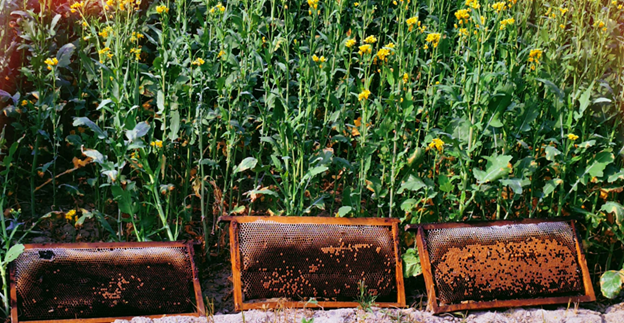
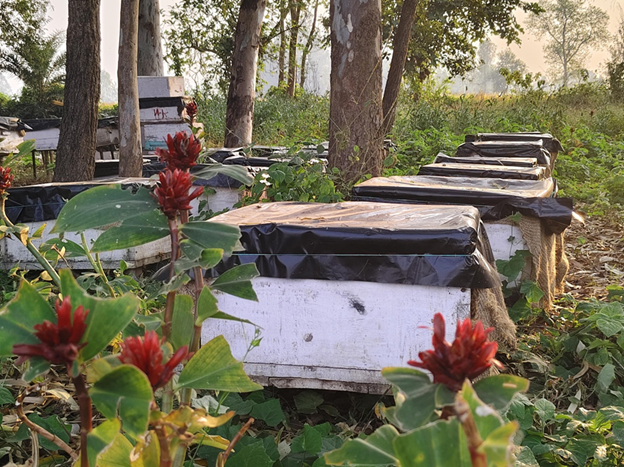
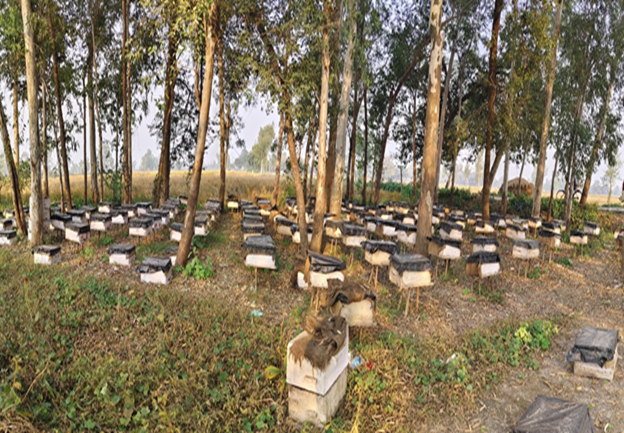
We are a chain of farmers and bee keepers and due to which we know the exact locations of many associated farmers all over india who still grow organic (Desi) Mustard, Leechee and many other crops without using any pesticides, synthetic fertilizers, herbicides, genetically modified organisms (GMOs). These small villages and town bee keepers also have awareness about what more it takes to produce organic honey. Like no chemical treatments for pests or diseases, organic forage and water sources, natural hive management etc. so we only migrate our bees to those farm lands and orchards to produce organic honey.
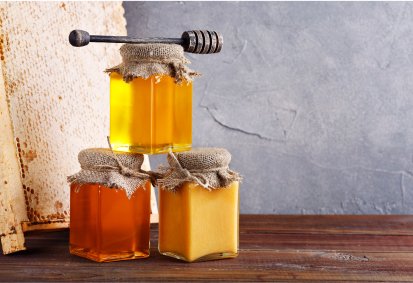
Benefits of eating organic honey

Its pure because its free from pesticides, herbicides, and synthetic chemicals. Organic honey nutritional value is super great because its rich in antioxidants, vitamins, and minerals. The taste is better and its often described as having a richer, more complex flavor with natural aroma. It supports the environment sustainable beekeeping and eco-friendly practice. It has many health benefits like antibacterial, anti-inflammatory properties and enzymes. Organic honey is more famous because it has no added sugars, preservatives, or artificial flavorings.
Research and Development

How does pollen diversity determine honey’s healing properties, taste and colour? Most people buy honey by color or label, then wonder why one spoon soothes a sore throat while another tastes like sunshine after rain. A beekeeper will tell you the quiet truth hiding in the jar: diversity of pollen is the compass of flavor and the backbone of honey’s soothing power. Bees shimmer in a soft cloud, legs dusted with yellow and rust, as if they’ve been wading through paint. She tips a tiny stream of honey into a spoon and holds it to the air, smelling something like apple peel, damp clover, and warm hay. Two jars from the same yard sit on the tailgate, one pale as straw, one copper-dark. Same beekeeper, same week, different patches of flowers. Sunil ( The bee keeper ) smiles and points toward the meadow, then to a strip of fennel beyond the fence. The day is just waking, but the lesson is ancient.
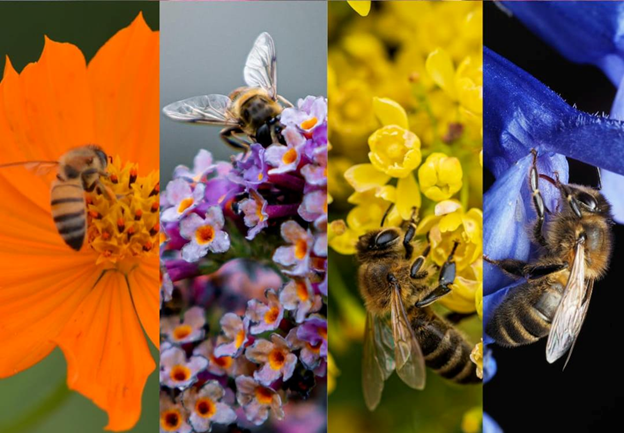
Why pollen diversity changes the jar?

Pollen is the bees’ protein, but for us it’s a breadcrumb trail of plants—tiny signatures suspended in a sea of sugars. Those grains slip into honey along with nectar and enzymes, carrying phenolic compounds, acids, and aromas. When a colony forages widely, the honey gathers a broader palette of plant chemicals.

That range doesn’t just tweak flavor notes like citrus or malt. It shapes texture, color, and how honey behaves on a sore throat or scrape. In jars with richer pollen diversity, you often get a more layered taste and a wider mix of antioxidants. The hive becomes a blender of meadows, hedges, trees, and weeds—each adding a small piece of bite or balm.

On paper, it sounds romantic; in practice, it’s chemistry. Honey’s antimicrobial kick comes from glucose oxidase creating hydrogen peroxide, plus botanical compounds like flavonoids and acids. Nectar sets the base. Pollen adds nuance that can shift the total phenolic content and oxygen radical absorbance. Think of pollen as the choir, not a soloist.

One beekeeper’s proof: fields, numbers, and a tailgate test

Sunil ran a split experiment last spring. Half his hives stayed near a broad meadow with Acacia, Rosewood, jamun, and a wild tangle “the county forgot to mow.” The others sat by a neat block of Acacia. Same weather, same week, different grocery lists for the bees. Back at his tent, he jarred the lots separately and called a friend at the local lab.

Under a microscope, the polyfloral jar showed 14 dominant pollen types and a handful of rare grains. The monocrop jar showed two. The lab noted higher total phenolics in the diverse jar and a stronger scavenging capacity in a quick antioxidant assay. *On the tailgate, you could taste it: the meadow honey was bright and slowly unfolding, while the Rosewood jar hit with molasses and iron, then faded.* Both were honest. One was broader.

Flavor isn’t just a plant list; it’s the way those compounds ride on the sugars. Dark honeys often carry more minerals and antioxidants, but a mixed floral spectrum can broaden the protective profile even when the color stays light. Analysts call it melissopalynology when they count the grains. Beekeepers call it listening to the land.

How to read a honey jar like a beekeeper?

Start with the simplest test: hold the jar to daylight. Notice color shifts from pale straw to amber to mahogany, then take a slow sniff. Spin the jar—do crystals build like frost or is it glassy-smooth. Read the label for harvest season, floral source, and whether it’s raw. *If it says “wildflower,” that’s your hint at diversity.* If it says “single varietal,” expect a clearer, sharper profile from one dominant bloom.

Next comes the taste test in two sips: first neat, second with a drop of water on your tongue to wake gentle acids and hidden notes. Don’t microwave; warm a spoonful in your palm to keep enzymes and aroma intact. Let’s be honest: nobody does this every day. Even so, a slow spoon just once can teach you more than a month of guessing. Shopping mistakes are human. People choose by color alone, forget seasonality, or equate “local” with magic for allergies. Local can be lovely for connection and freshness, yet pollen exposure is tiny and results vary by person. Store at room temp, lid tight, and welcome crystallization as a sign of unfiltered reality, not spoilage. Flavor follows flowers,” Sunil told me, “and flowers follow weather, soil, and what the neighbors plant or neglect.”

  • Look for specifics on the label: harvest date, region, floral mentions.
  • Seek raw and unfiltered if you want more pollen and aroma intact.
  • Taste across seasons—spring, summer, late-summer—to map diversity.

What this means for your toast, your tea, and your little first-aid kit?

Honey isn’t a miracle; it’s a map. A spoon from a diverse landscape brings layered flavors and a broader mix of plant compounds that can feel soothing on a sore throat or useful on a small cut. We’ve all had that moment when a familiar taste takes us back to a place, and a jar of polyfloral honey does it with surprising accuracy.

In the kitchen, that means pairing becomes fun: meadow honey with fresh cheese, dark Rosewood with roasted roots, eucalyptus-kissed blends in a steam bowl on a stuffy night. In the medicine cabinet, it means a clean, raw jar for simple home uses—throat, cough, small scrapes—knowing that the science points to honey’s antimicrobial and humectant actions while the exact “feel-better” fingerprint shifts with the pollen chorus. There’s room for curiosity in every spoon.

Buy a small flight from one beekeeper across seasons and taste side by side. Notice what lingers, what opens in warm tea, what numbs the noisy part of the day. **Your favorite jar might be the one that tastes like where you live, not the one with the loudest label.

Does darker honey mean healthier?

Often darker honeys test higher in minerals and antioxidants, yet diverse light honeys can be robust too.

Will local honey fix my seasonal allergies?

Some people report relief, but pollen exposure in honey is small and results are inconsistent.

What’s the quickest way to spot diversity in a jar?

Look for “wildflower,” harvest details, and taste across seasons from the same beekeeper.

Does heating ruin honey’s benefits?

High heat can degrade enzymes and aroma; gentle warming keeps most qualities intact.

Is monofloral honey “worse” than polyfloral?

No—single-origin honeys can be stunning and targeted in flavor; polyfloral jars are broader in profile.

Bees migration challenge

Beekeeping in India can be rewarding, but it also comes with a range of challenges — both environmental and socio-economic. Here’s a detailed overview of the main problems faced by Indian beekeepers:

Environmental Challenges

  • Climate change: Irregular rainfall, rising temperatures, and prolonged dry or wet spells affect flowering patterns and nectar availability.
  • Habitat loss: Deforestation, urbanization, and monocropping reduce the diversity of flowering plants essential for bees.
  • Pesticide exposure: The use of chemical pesticides (especially neonicotinoids) in nearby farms harms bee colonies and reduces their lifespan.
  • Seasonal fluctuations: Limited flowering seasons mean bees face long periods without nectar flow, making it hard to maintain colonies year-round.

Disease and Pest Infestations

  • Varroa mite and wax moths are major threats to honeybee colonies.
  • Nosema disease and American foulbrood also affect bee health.
  • Lack of proper training means many beekeepers fail to identify or control diseases in time.

Agricultural and Ecological Issues

  • Monocropping practices: Crops like mustard or sunflower bloom only for a short time; during off-seasons, bees struggle to find food.
  • Use of hybrid seeds: Many hybrid crops produce less nectar or pollen.
  • Reduced biodiversity: Decline in native flora limits bees’ nutrition diversity.

Economic and Market Challenges

  • Price fluctuations: Honey prices vary depending on purity, season, and middlemen influence.
  • Lack of organized market: Most beekeepers sell through intermediaries, reducing their profit margins.
  • Adulteration in honey: Rampant adulteration by large producers affects consumer trust and depresses market prices for genuine honey.
  • Limited access to credit: Many small-scale beekeepers lack formal financing or insurance support.

Technical and Knowledge Gaps

  • Limited training: Many beekeepers use outdated methods or lack knowledge on modern management practices.
  • Poor queen management: Inadequate queen rearing affects colony strength and productivity.
  • Inadequate R&D: There’s limited scientific research on local bee species, nectar sources, and breeding programs.

Migration and Colony Management Issues

  • Migratory beekeeping (moving colonies to different flowering zones) is expensive and risky due to theft, poor roads, and exposure to pesticides.
  • Colony losses during transport are common due to stress or poor ventilation.

Social and Structural Challenges

  • Low community organization: Lack of cooperatives or associations limits bargaining power.
  • Public perception: Many farmers see bees as pests rather than partners in pollination.
  • Gender gap: Though women often help in honey extraction, they rarely receive training or recognition.