
Export & Shipping method summary
We just wanted to share a bit more about how we handle honey exports so you can see exactly what we do and how we maintain quality from production to delivery.
We produce and pack 100% natural honey that’s tested by accredited laboratories before shipment. Each batch is checked for moisture content, HMF levels, sucrose, and purity to make sure it
Meets international export standards. We can provide full test reports and certificates for every lot.
For export, we supply honey in food-grade HDPE drums (usually 25 kg or 290 kg, depending on your preference) or retail 4 Oz to 1.5Lb glass jars, 4 Oz to 5Lb Food grade plastic bottles. Each
Container is sealed, Tightly stuffed to prevent damages during shipments, All the pallets are completely wrapped in stretch film to keep them intact and air tight, labeled with batch numbersand expiry dates, and fully traceable back to the apiary.
We take care of all export documentation, including
- Health Certificate from the relevant food authority
- Certificate of Origin (from the Chamber of Commerce)
- Laboratory Analysis Report
- Export Invoice and Packing List
- Any special labeling or import requirements (for example, if the destination is the USA, GCC, or EU
- Our logistics team works with experienced freight forwarders who regularly handle food shipments. We manage customs clearance, container loading, and ensure proper palletizing and
- temperature Conditions during transport to keep the honey safe and consistent.
- We can also send you:
- Photos and videos of our production and packaging process
- Copies of our export certificates and past shipment documents
- Samples from the same batch we plan to ship
The real sale is service. We believe transparency and reliability are the best ways to build trust, and we’re happy to provide whatever you need to feel confident about working with us.
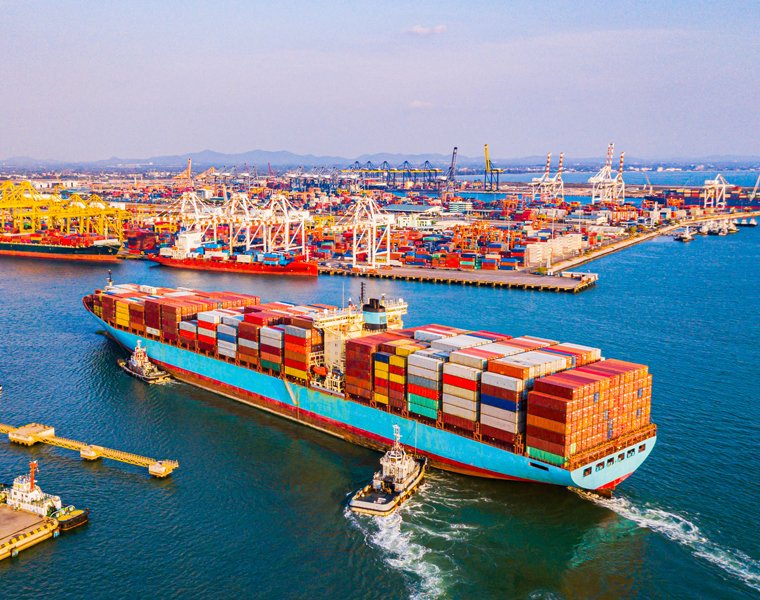
Container Load Types FCL (Full Container Load)
Meaning: One shipper’s cargo occupies the entire container.
Ownership: The container is sealed by the shipper and opened only by the consignee.
Best for: Large shipments that can fill most of a container or when security and segregation from other cargo are important.
Common Sizes:
- 20-foot (approx. 33 cubic meters)
- 40-foot (approx. 67 cubic meters)
- 40-foot High Cube (approx. 76 cubic meters)
Advantages:
- Lower cost per unit (economies of scale)
- Less risk of damage/theft (fewer touchpoints)
- Faster transit (no consolidation/deconsolidation delays)
Disadvantages:
- Higher total cost if not fully utilized
- Shipper must handle loading/unloading or pay for it
LCL (Less than Container Load)
Meaning: Cargo from multiple shippers is consolidated into one container.
Handled by: A freight forwarder or consolidator.
Best for: Smaller shipments that don’t fill a full container.
Advantages:
- Pay only for space used
- Cost-effective for small loads
- Lower storage and inventory costs
Disadvantages:
- More handling (higher risk of damage/delay)
- Longer transit times due to consolidation/deconsolidation
- Possible extra fees (handling, documentation)
Key Shipping Terms (Incoterms)
Incoterms define responsibilities between buyer and seller for shipping, insurance, and customs. Some common ones in container shipping are
| Term | Full Form | Seller’s Responsibility Ends At | Buyer Pays From |
| EXW | Ex Works | Seller’s premises | All transport & insurance |
| FCA | Free Carrier | When cargo is delivered to the carrier | From carrier onward |
| FOB | Free On Board | When cargo is on board the vessel | After vessel loading |
| CFR | Cost and Freight | When cargo arrives at destination port | After port arrival (insurance not included) |
| CIF | Cost, Insurance & Freight | When cargo arrives at destination port | After port arrival (insurance included) |
| DAP | Delivered at Place | When goods arrive at buyer’s location | Import duties |
| DDP | Delivered Duty Paid | Buyer’s door (seller covers all costs, duties, and taxes) | None |
Typical Process Flow for FCL
- Shipper loads and seals container.
- Container transported to port.
- Loaded onto vessel.
- Shipped to destination port.
- Cleared through customs.
- Delivered to consignee.
For LCL:
- Shipper sends cargo to consolidator’s warehouse.
- Consolidator loads container with multiple shipments.
- Shipped to destination port.
- Deconsolidated at destination warehouse.
- Delivered to consignee.
Container Load Documentation
Essential documents in container shipping include:
- Bill of Lading (B/L) – contract of carriage & receipt of goods
- Commercial Invoice – seller’s bill to buyer
- Packing List – detailed list of items, dimensions, weights
- Certificate of Origin – certifies the country of manufacture
- Insurance Certificate (if applicable)
- Import/Export Declarations – for customs clearance
What Is Air Freight
Air freight refers to transporting goods via aircraft — either in dedicated cargo planes or in the belly of passenger aircraft. It’s used for high-value, time-sensitive, or perishable goods.
Key Components of Air Freight
| Category | Details |
| Mode | – Consolidated cargo (shared space with others) – Direct air freight (one shipper, one consignment) – Charter service (entire aircraft booked) |
| Transit Time | – Typically 1–5 days internationally (faster than sea or land). |
| Typical Goods | Electronics, pharmaceuticals, automotive parts, luxury items, perishables, urgent documents. |
Air Freight Documentation
| Document | Description |
| Air Waybill (AWB) | The main document — proof of contract, receipt, and title for the goods. It has an 11-digit number used for tracking (issued by airline or agent). |
| Commercial Invoice | Issued by the exporter; shows value, HS code, and transaction terms. |
| Packing List | Itemizes contents, weight, and dimensions of each package. |
| Certificate of Origin | Confirms where goods were produced; needed for customs or preferential tariffs. |
| Export/Import Licenses | Required for controlled goods. |
| Insurance Certificate | Optional, protects the cargo during transit. |
Weight & Volume Calculations
Air freight cost depends on chargeable weight, which is the greater of:
Actual (gross) weight
Volumetric (dimensional) weight
Formula:
\text{Volumetric Weight (kg)} = \frac{L \times W \times H}{6000}
Example: A box 100×80×60 cm = 480,000 ÷ 6000 = 80 kg (volumetric weight).
If actual weight is 50 kg → charged at 80 kg.
Air Freight Rates & Charges
| Type | Description |
| Basic Air Freight Rate | Rate per kg (depends on route, volume, and airline). |
| Fuel Surcharge (FSC) | Variable based on fuel prices. |
| Security Surcharge (SSC) | For airport security handling. |
| Terminal Handling Charges (THC) | Loading/unloading fees at airports. |
| Documentation Fees | For AWB issuance and processing. |
| Customs Duties & Taxes | Paid separately at destination. |
Air Freight Process (Step-by-Step)
Booking with airline or freight forwarder.
Cargo pick-up & packaging (must meet airline & IATA Dangerous Goods Regulations).
- Export customs clearance at origin.
- Airline acceptance & flight departure.
- Arrival at destination airport.
- Import customs clearance.
- Delivery to consignee (door delivery).
Key Players in Air Freight
Major Airlines: Emirates SkyCargo, Qatar Airways Cargo, Lufthansa Cargo, FedEx, UPS, DHL Aviation.
Freight Forwarders: DB Schenker, Kuehne+Nagel, DHL Global Forwarding, DSV, Expeditors.
Airports: Hong Kong (HKG), Memphis (MEM), Shanghai (PVG), Incheon (ICN), Doha (DOH), Frankfurt (FRA).
Advantages vs Disadvantages
Advantages | Disadvantages |
Fast & reliable | High cost per kg |
Global reach | Limited capacity & size |
Secure & less handling | Weather-dependent |
Ideal for high-value cargo | Environmental impact (CO₂) |